What Is MicroSD Express and Why Switch 2 Needs It?
When Nintendo revealed the Nintendo Switch 2 last week, it confirmed the console will only support expansion via MicroSD Express cards. This may be frustrating for those with a library of regular MicroSD cards, but the decision is logical—MicroSD Express offers significantly faster performance.
These cards connect to the device in a way that enables read/write speeds comparable to the UFS (Universal Flash Storage) used inside the Switch 2. This alignment is essential, as it means games stored on the expansion card should load almost as quickly as those saved on the internal storage—at least in theory. The trade-off is that more affordable, non-express MicroSD cards won’t be compatible.
MicroSD vs. MicroSD Express
MicroSD cards have evolved through six different speed classes over time. The earliest versions offered only 12.5MB/s—a pace considered extremely slow today. Newer standards gradually boosted speeds, starting with SD High Speed at 25MB/s, all the way up to SD UHS III (Ultra High Speed) at 312MB/s. Five years ago, however, the SD Association introduced the SD Express specification, delivering a major leap in transfer rates.
The key distinction lies in the interface: SD Express uses PCIe 3.1 instead of the older, slower UHS-I bus. PCIe is the same interface that powers high-speed NVMe SSDs, unlocking far greater performance potential. Full-size SD Express cards can now reach speeds up to 3,940MB/s—exponentially faster than earlier SD generations.
Though MicroSD Express cards don’t match the top speeds of full-size cards, they still deliver impressive performance, hitting up to 985MB/s. That’s roughly three times faster than the quickest non-express MicroSD option.
Why Does the Switch 2 Require MicroSD Express?
Nintendo rarely shares the exact reasoning behind its hardware choices, but several factors likely influenced the requirement for MicroSD Express in the Switch 2. Speed is the most obvious. If you install the same game on both a traditional UHS-I MicroSD and a MicroSD Express card, the latter will load much faster due to its PCIe 3.1 interface—a requirement that may soon appear in handheld gaming PCs as well.
Since the Switch 2’s internal storage has also been upgraded from eMMC to UFS (Universal Flash Storage), it makes sense for Nintendo to demand similar speeds from expandable storage. We won’t know the exact load time improvements for games like Breath of the Wild until later, but early previews suggest notable gains—from a 35% reduction when fast traveling (per Polygon) to a threefold improvement in initial loads (per Digital Foundry). These faster load times might result from the quicker internal storage, the enhanced CPU and GPU for faster data decompression, or both. The bottom line: Nintendo needed external storage with comparable speeds to prevent future game experiences from being limited by slower media.
This requirement also allows for storage upgrades down the line. At present, the top standard for SD cards is the SD 8.0 specification, which permits full-size SD Express cards to reach up to 3,942MB/s. While MicroSD Express cards aren’t that fast yet, it’s feasible in a few years—assuming the Switch 2 supports those higher speeds.
MicroSD Express Capacity Options
MicroSD Express adoption has been gradual, and although this may change with the Switch 2’s launch, current choices are limited. Lexar, for example, only has one MicroSD Express model in 256GB, 512GB, and 1TB capacities—with the 1TB version priced at $199.
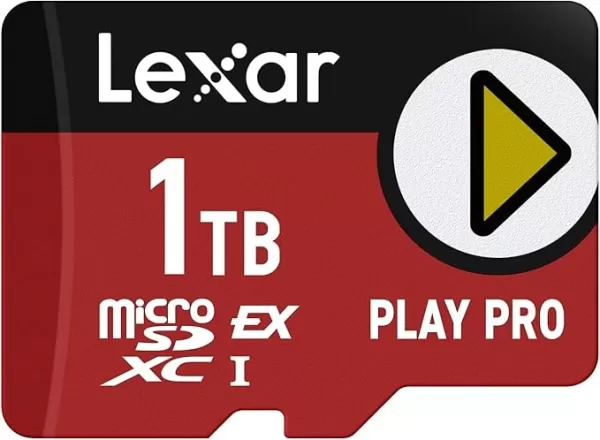
Lexar Play Pro MicroSD Express
View at Amazon
SanDisk currently lists just one MicroSD Express card on its website, which maxes out at 256GB—matching the Switch 2’s internal storage. By the time the console actually launches, don’t expect many MicroSD Express options beyond 512GB. Fortunately, availability should expand quickly as more manufacturers, including Samsung, ramp up production.
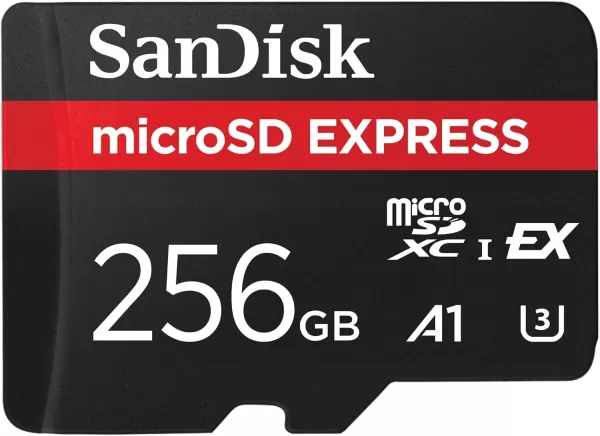
SanDisk MicroSD Express 256GB
View at Amazon
Latest Articles
Trending Games









Top News

![Roblox Forsaken Characters Tier List [UPDATED] (2025)](https://images.dyk8.com/uploads/18/17380116246797f3e8a8a39.jpg)




Latest Games